
Hydrogen Economics Is an Energy Problem
Across all hydrogen production pathways, electricity consumption is the single largest determinant of cost.
Conventional water electrolysis typically requires ~50 kWh of electricity per kilogram of hydrogen, which directly translates into high operating costs and sensitivity to power prices.
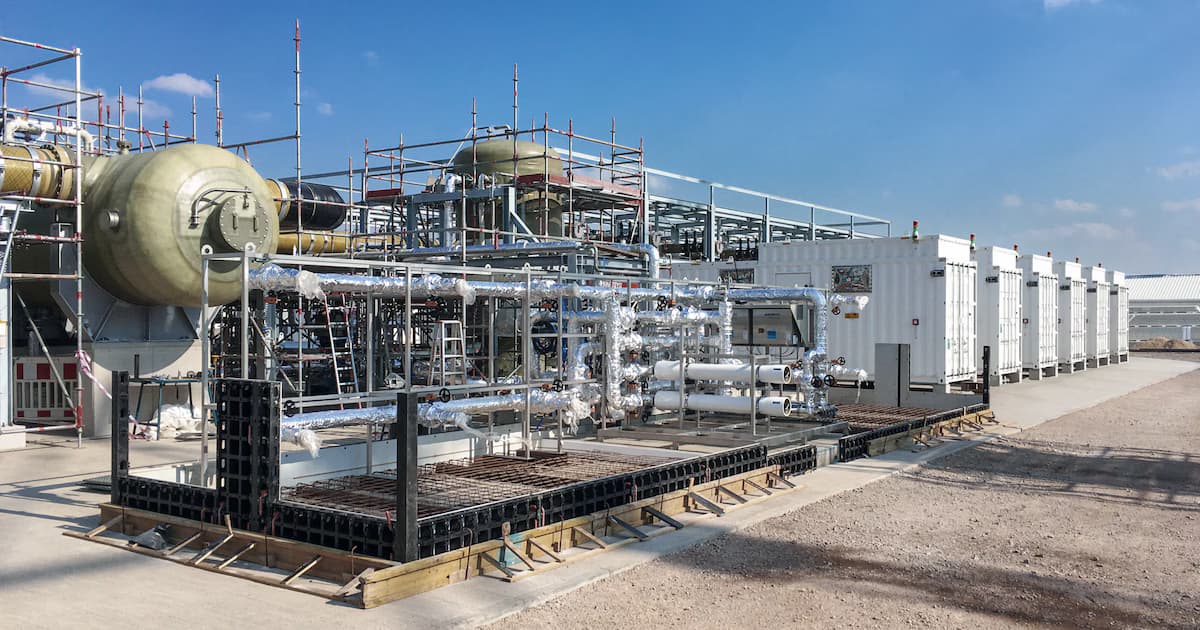
The Cost of Production
For green hydrogen to compete with fossil-derived inputs, the Levelized Cost of Hydrogen (LCOH) must drop significantly. Currently, 70-80% of the LCOH for electrolytic hydrogen is purely the cost of electricity.
Even with free renewable energy, the capital cost (CAPEX) of electrolyzers and the low utilization rates of intermittent power sources make the economics challenging.
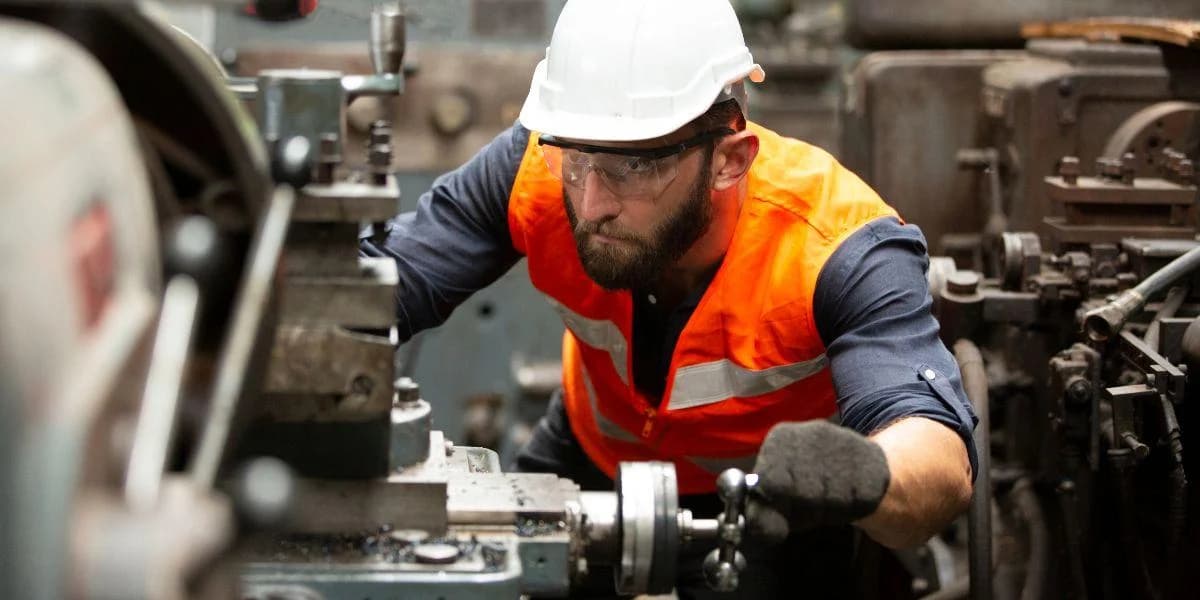
The Capital Problem
Traditional electrolyzers are complex, material-intensive machines that require expensive stacks, membranes, and catalysts.
- High reliance on Platinum Group Metals (PGMs)
- Complex balance of plant (BOP)
- Design life limitations due to membrane degradation
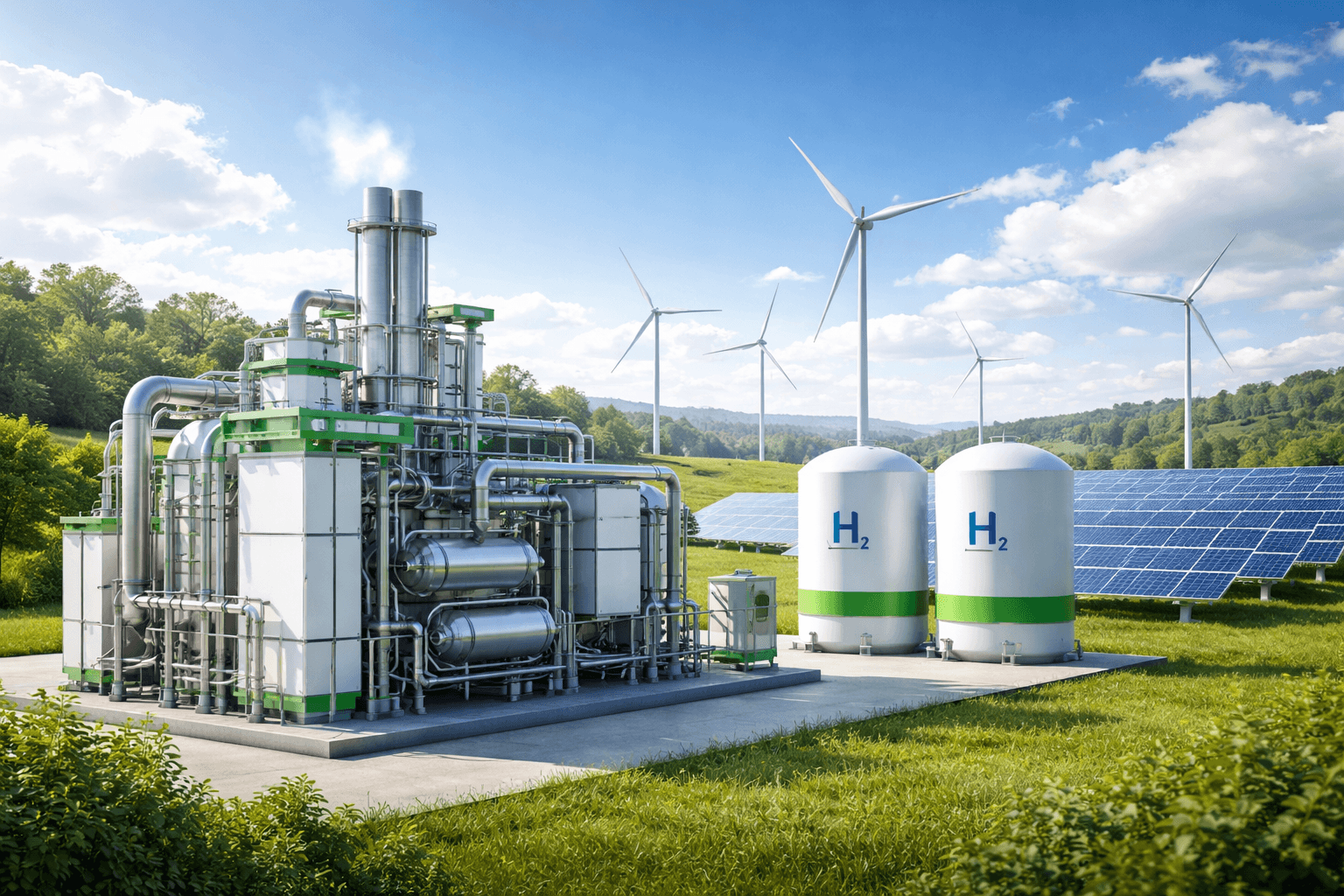
Radical Efficiency
Giga Cora Energy addresses the root cause of high LCOH by fundamentally reducing the energy required to split water.
By bypassing the thermodynamic barriers of conventional electrolysis, our platform targets a production consumption of < 35 kWh/kg.
This 30% reduction in energy intensity effectively decouples hydrogen production from peak power volatility.
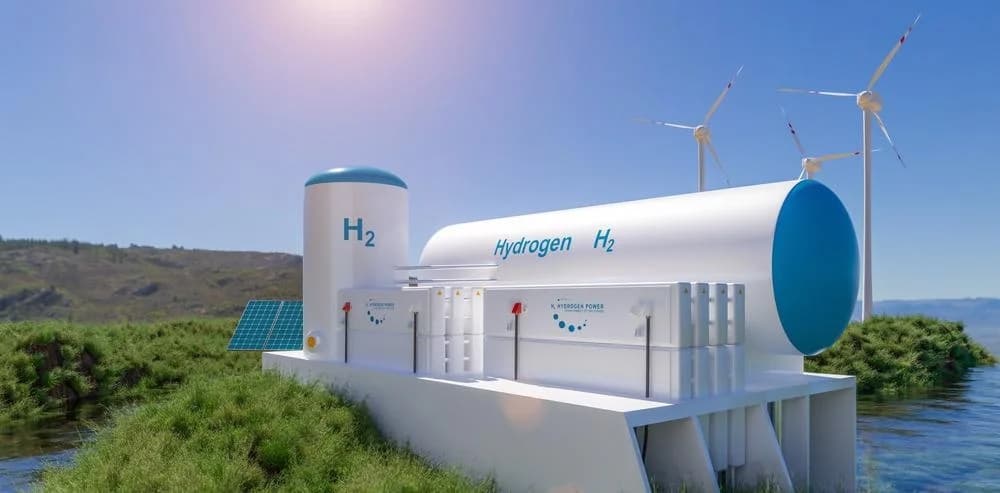
A Path to $1/kg
When high efficiency is combined with low-cost, modular hardware, the pathway to $1/kg green hydrogen becomes an engineering reality rather than a forecast.
This price point effectively unlocks heavy industry applications—steel, shipping, and chemicals—that cannot switch to hydrogen at current prices of $4-6/kg.
Engineered for Scale
Our technology is not just about efficiency; it is about scalability. The system is designed to be modular and factory-produced, allowing for rapid deployment and massive scaling.
By moving away from bespoke, site-built plants to standardized, modular units, we can drive down CAPEX and ensure consistent quality and performance.